
LESSON 05Daily workflows
Test your AI agent before customers do
Build a small, repeatable test set for known answers, missing knowledge, policy exceptions, and requests for a person.
What you’ll take away
- Define expected behavior before asking test questions.
- Check known and unknown answers against approved sources.
- Plan exception and human-request tests.
- Fix the underlying cause and repeat the same checks.
Make it your own.
Open your agent and choose Sandbox. Use approved test questions without real customer details.
Try this in Tuolen Sign-in and the appropriate workspace access are required.Read the full transcript
Prefer to read? Here’s the narration, organized by chapter.
Test before launch
Before your customers meet your agent, give it a few good tests. In this lesson, we'll use Tuolen's Sandbox to check real answers, spot missing knowledge, and build a simple testing habit you can repeat.
Build a four-question test set
Start with four kinds of questions: something your knowledge covers, something it doesn't, an exception to a policy, and a request for a person. Write down what a good response should do before you test. Otherwise, a confident-sounding answer can be surprisingly easy to accept.
Open the right Sandbox
Open your agent and choose Sandbox. Check that you're testing the right agent and that its knowledge is ready. The embedded preview is your place to try the conversation. Treat its temporary session link as private, and don't use real customer details in your test questions.
Check a known answer
Here's an actual recorded test: what is your return policy for unused items? The agent answers with thirty days from delivery, original packaging, and a useful follow-up question. Compare every condition with the approved source. We're checking accuracy, not whether the wording matches a script.
Check an unknown answer
Now ask something the source doesn't cover: do you offer a lifetime warranty? In this recorded response, the agent says it doesn't have that information and asks which product the visitor means. That's more helpful than guessing. Your own tests should check this boundary just as carefully as the easy answers.
Test exceptions and human requests
Add two more test cases to your checklist. Ask for an exception, like approving a refund outside the policy, then ask to speak with a person. These are suggested tests, not completed results shown here. Look for a clear boundary and the right next step, without a made-up approval.
Fix the cause and retest
When a test fails, fix the right thing. Missing facts belong in the knowledge base. Tone, boundaries, and escalation instructions belong in the agent settings. Change one thing, save it deliberately, and rerun the same questions. Keep a simple pass or review note so you can compare results.
A single good Sandbox answer cannot guarantee a successful launch. Repeat the checks after important changes, and test the real channel separately with your team. A reply in the preview doesn't prove that routing, delivery, or a human handoff works in production. Those need their own end-to-end check.
Make testing a habit
Start small, test the uncomfortable questions, and improve what you find. That's how you build confidence before customers are depending on the answer. Visit Tuolen dot com.
 Duration 3:10
Getting startedLesson 03
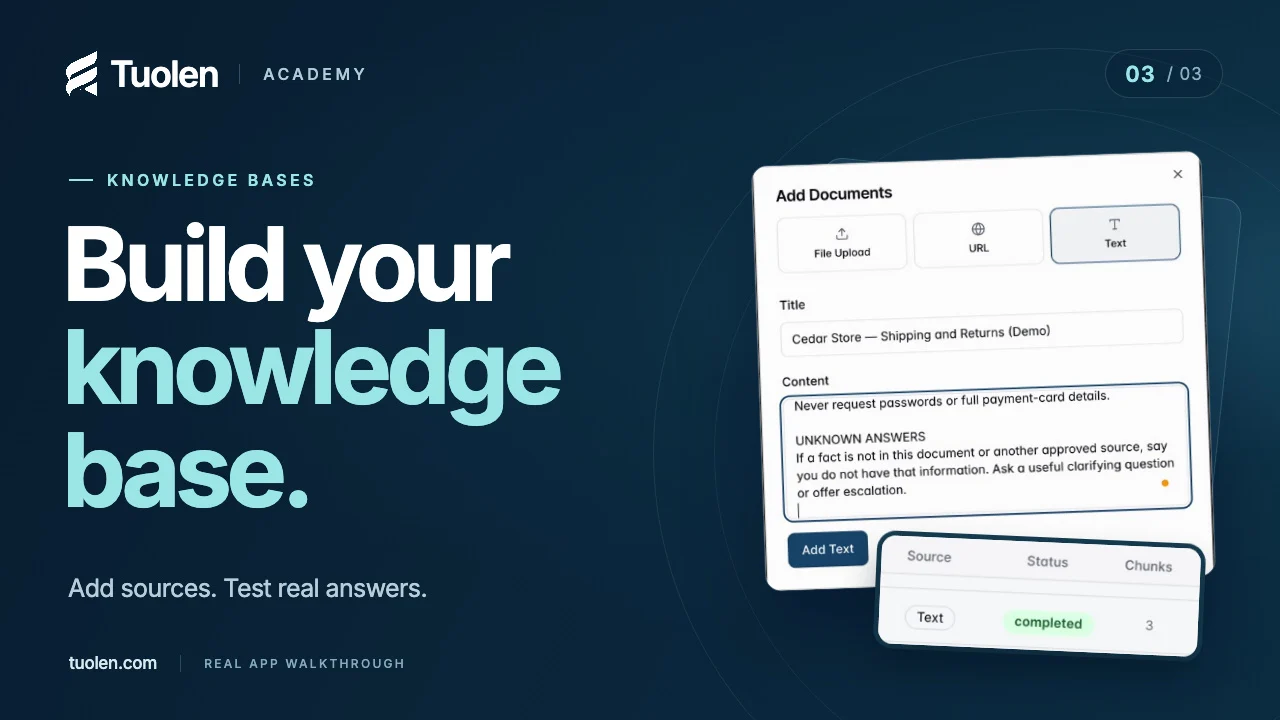
Give your agent the right knowledge
Add approved business information, verify processing, and test answers against the source—not just how confident they sound.
Watch tutorial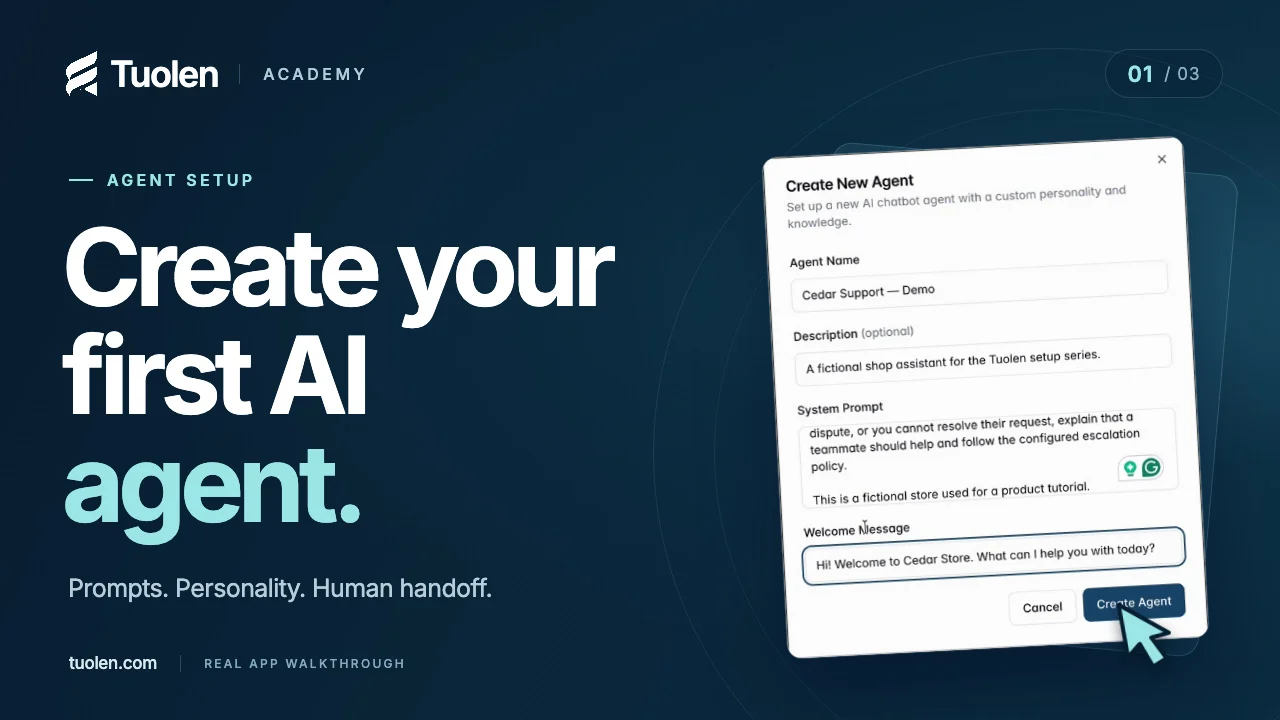 Duration 2:44
Getting startedLesson 01
Create your first AI agent
Give your agent a clear job, a helpful personality, and a plan for when a customer needs a person.
Watch tutorial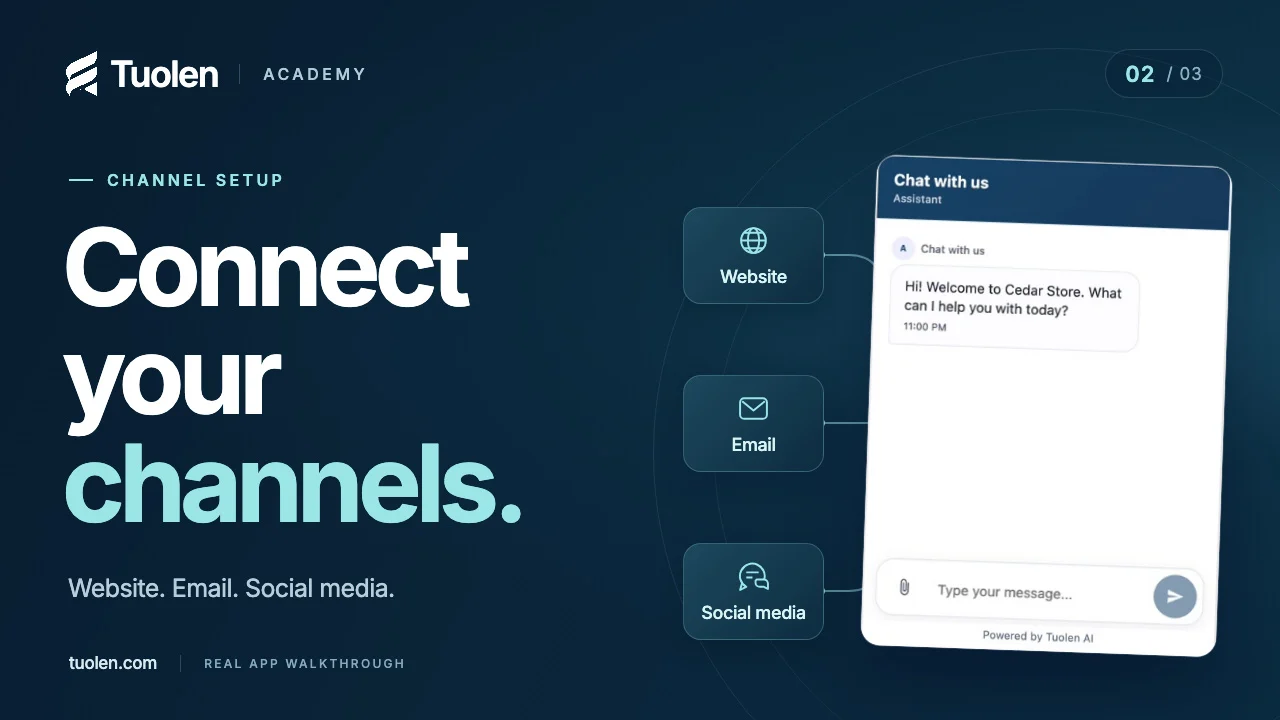 Duration 3:10
Getting startedLesson 02
Connect your customer channels
Explore website embeds, email, messaging, and social media—and the checks to make before going live.
Watch tutorial